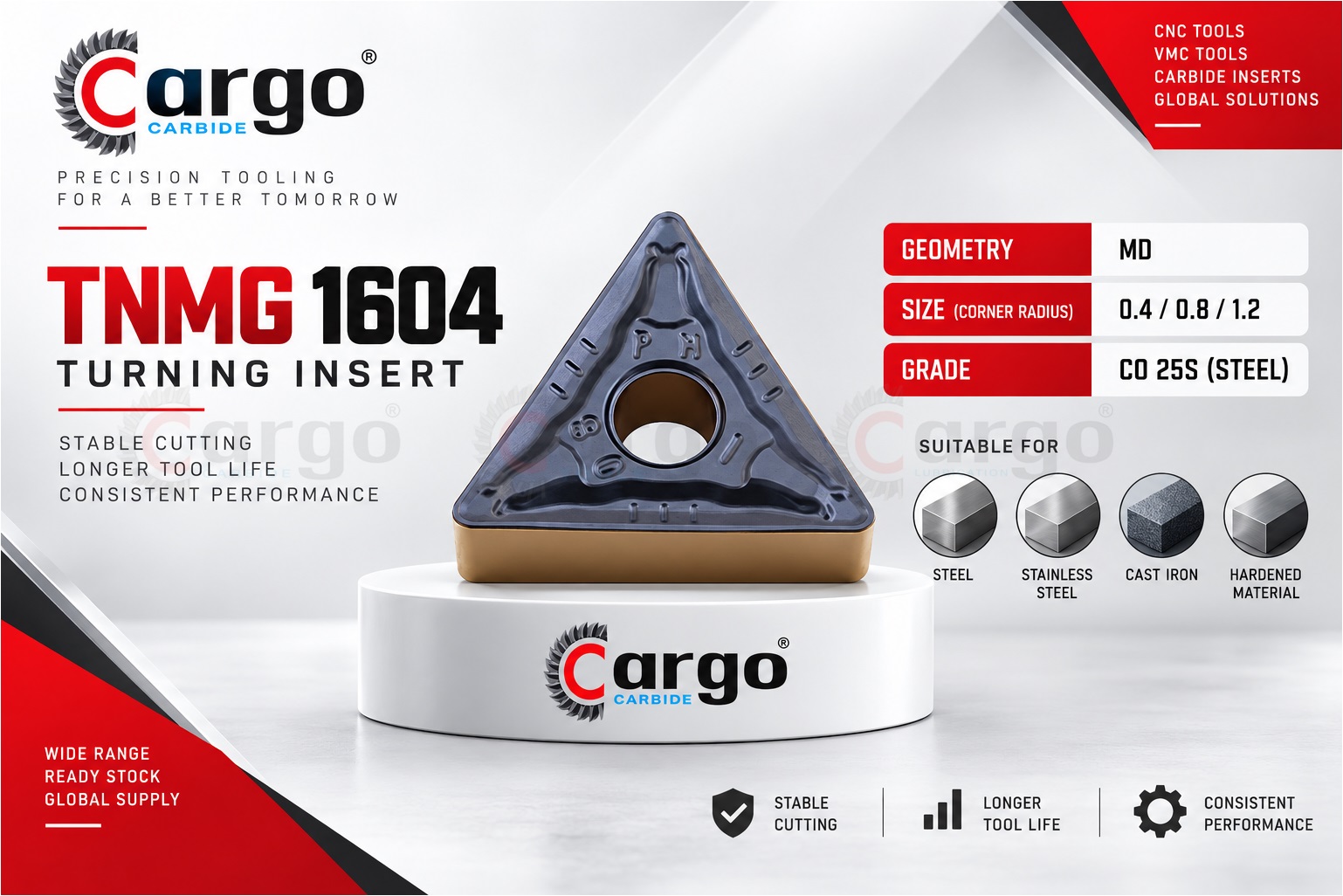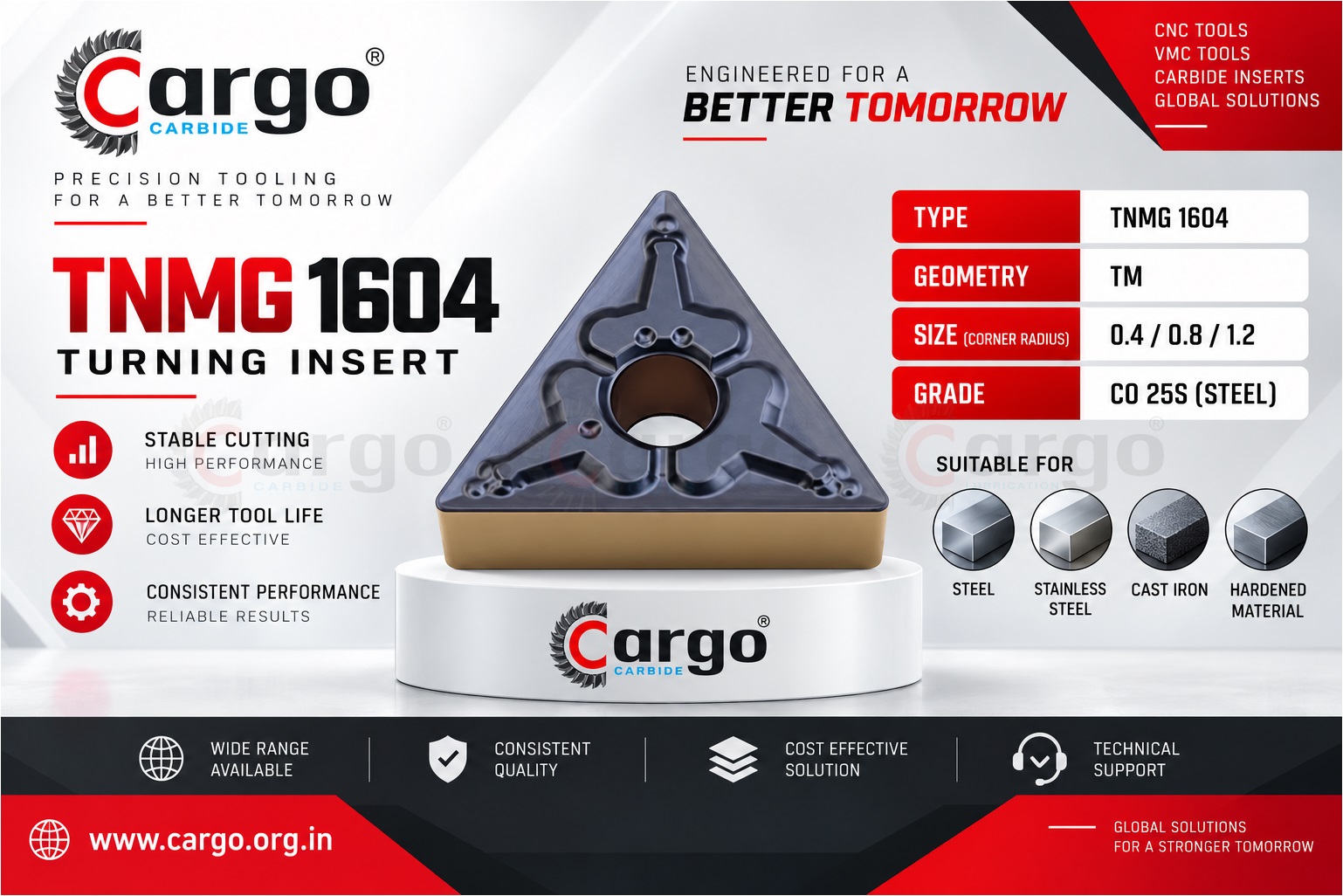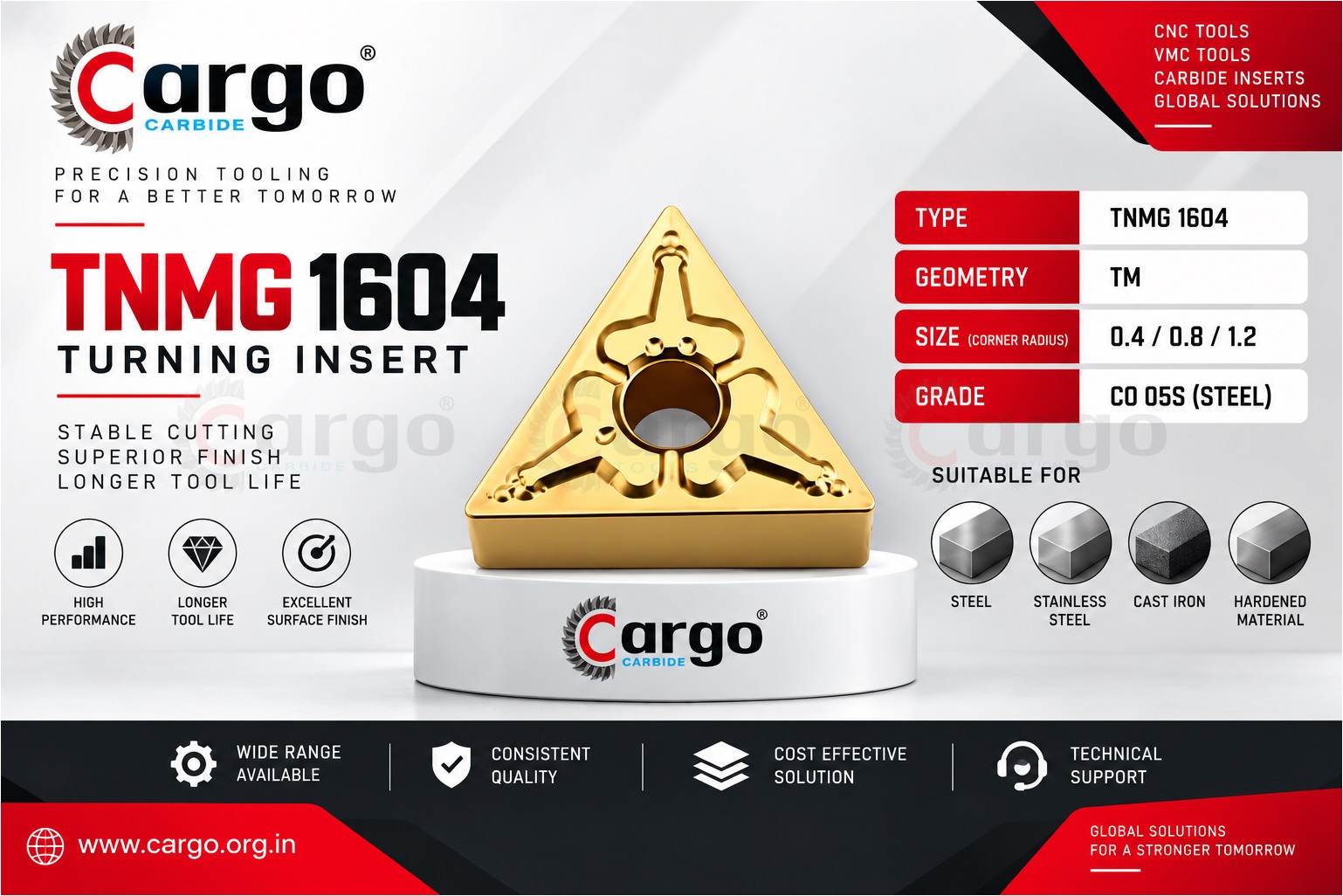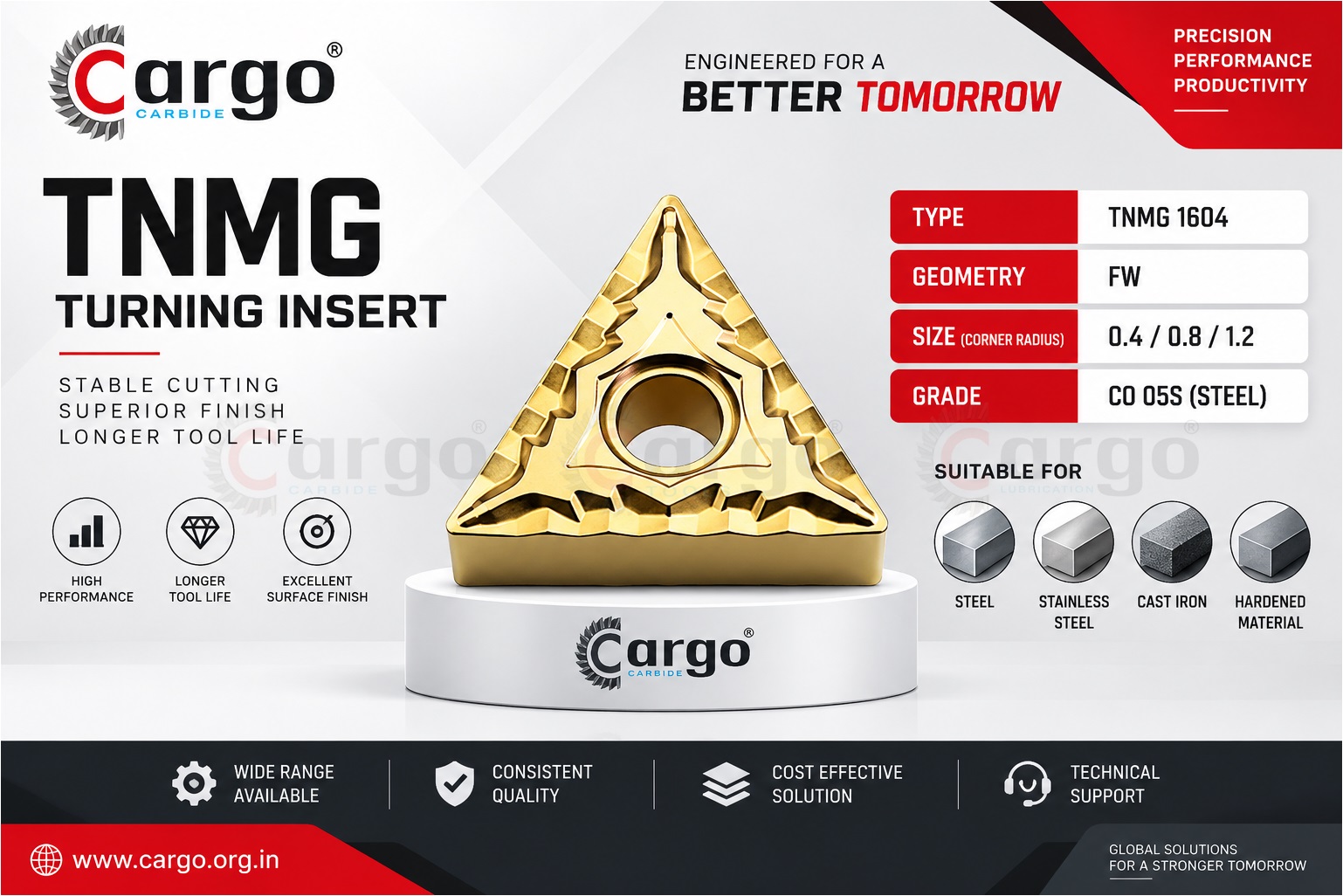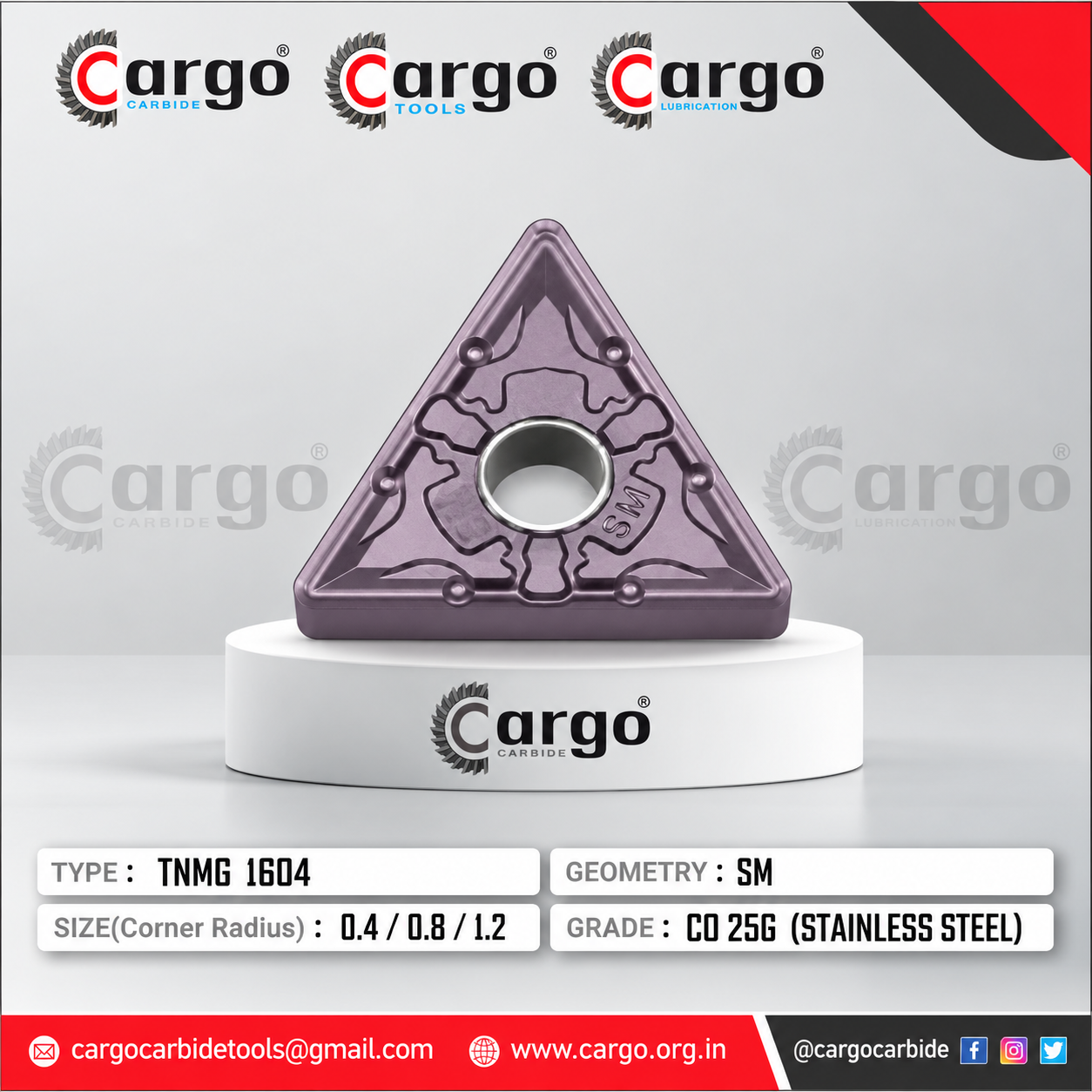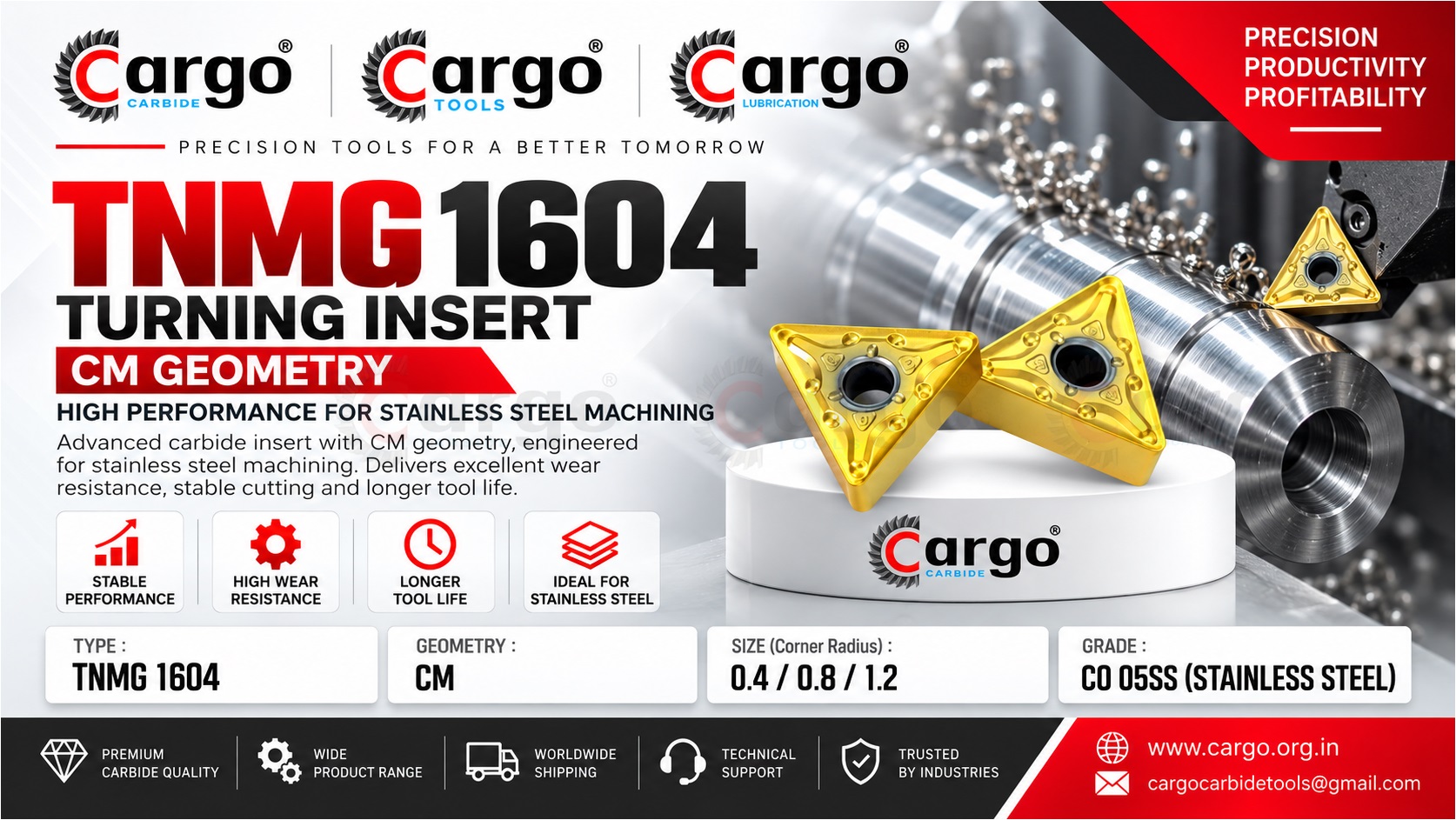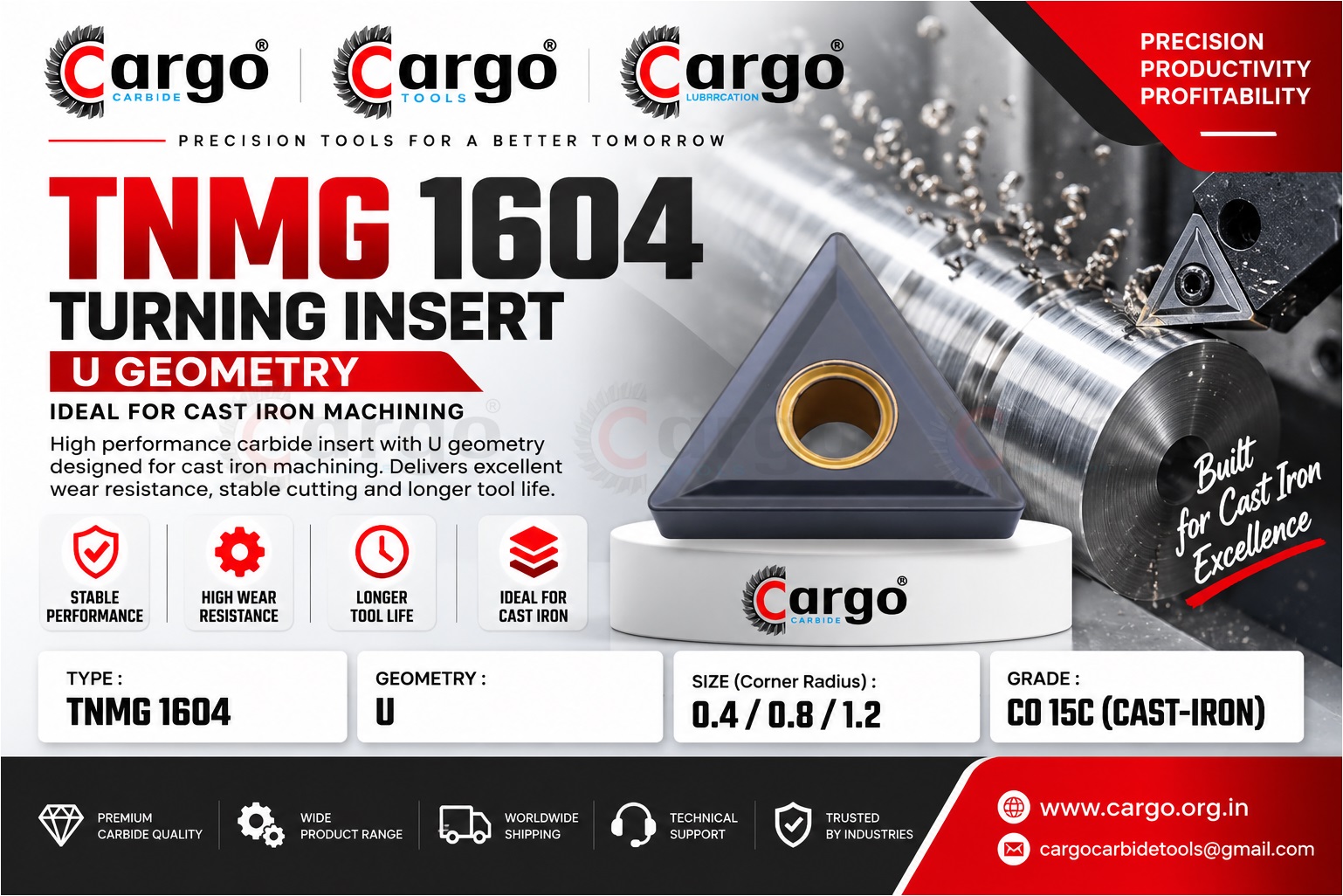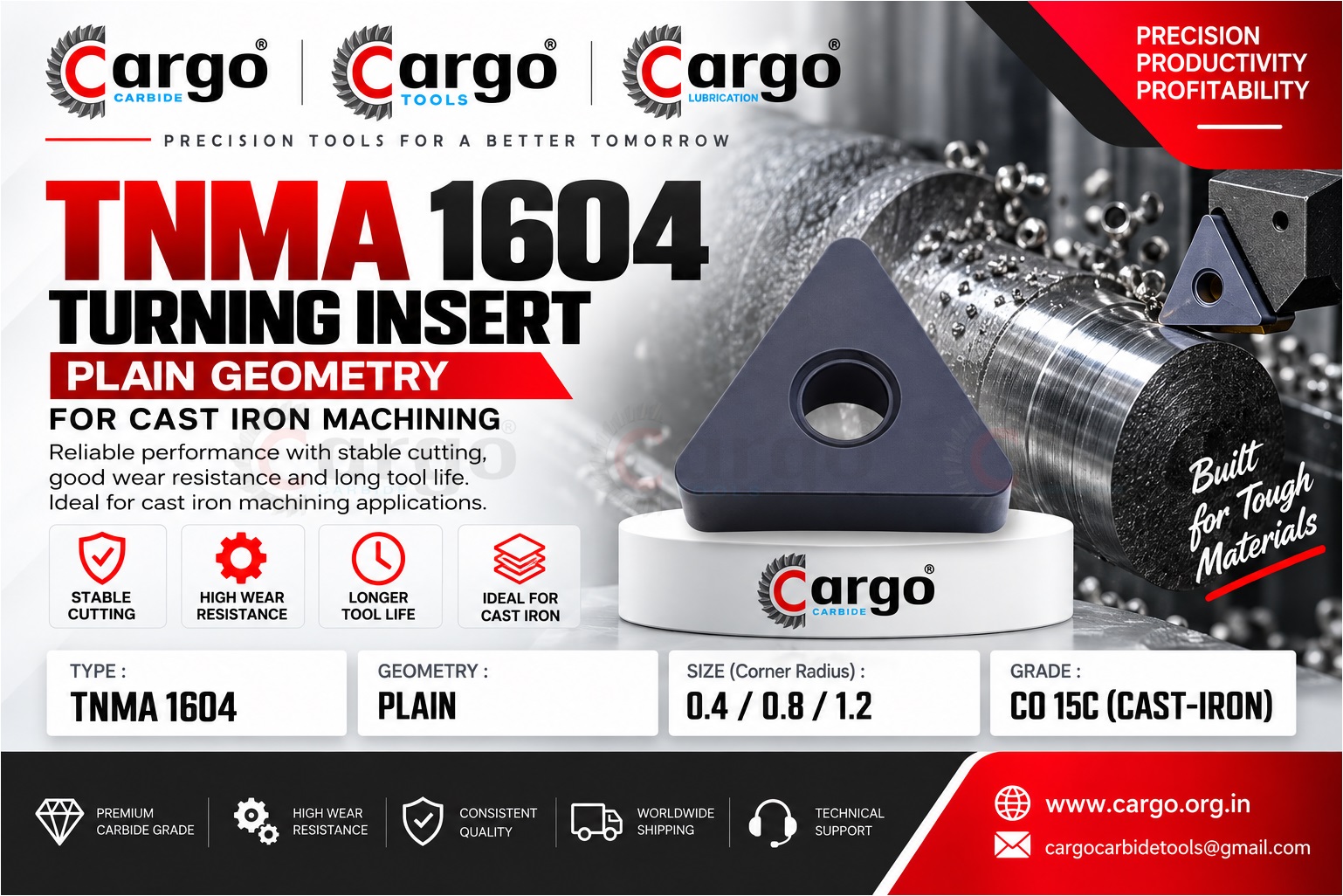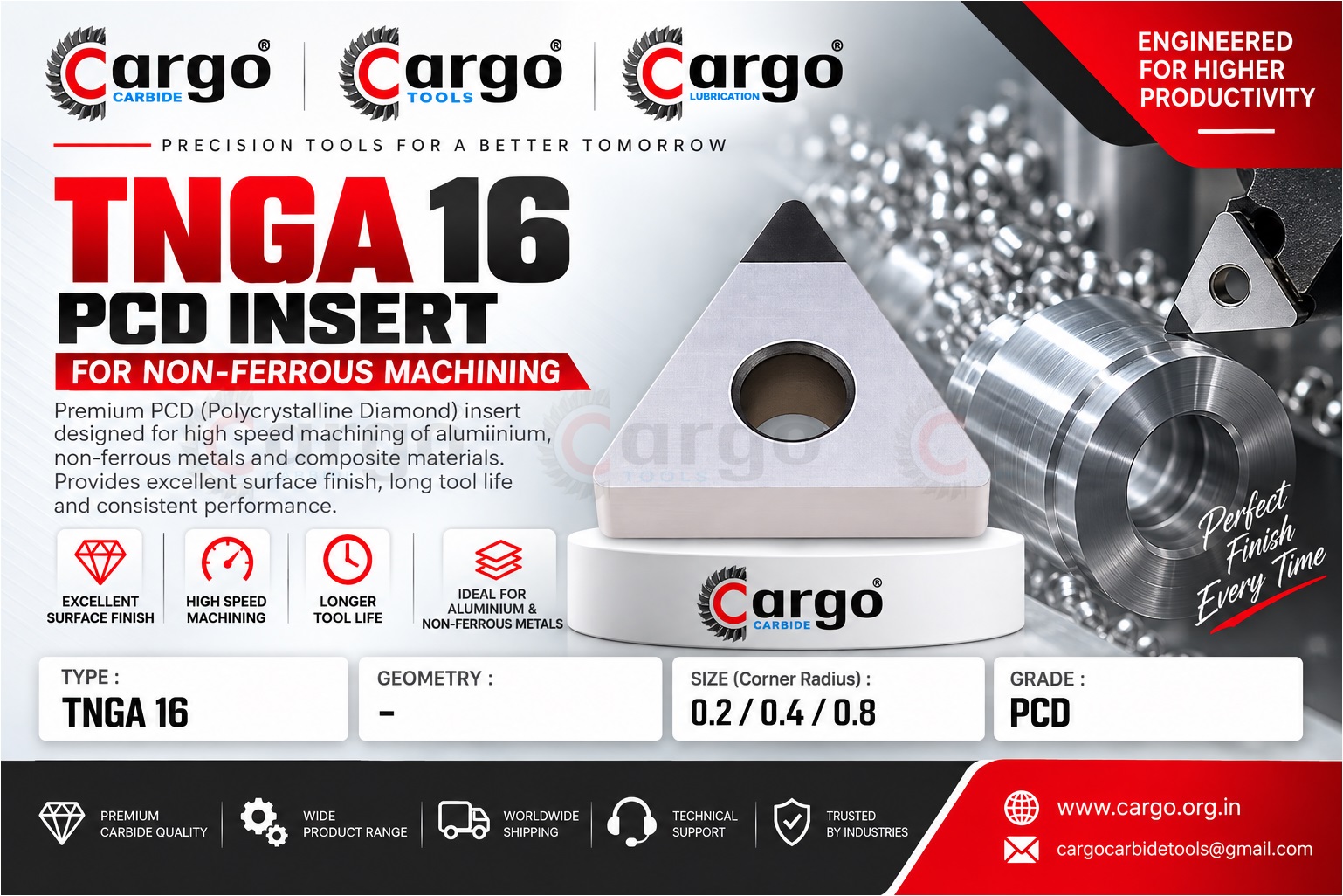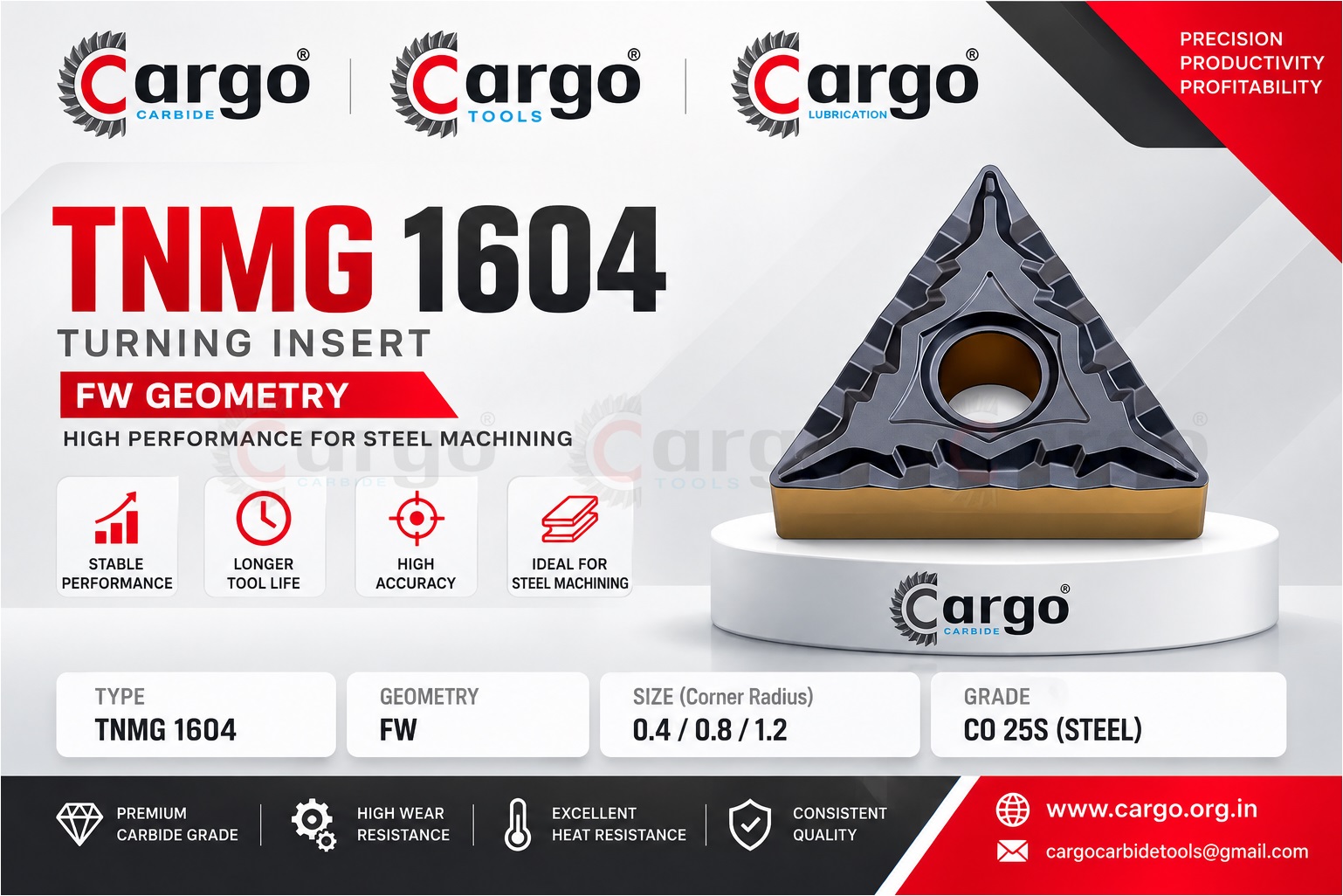
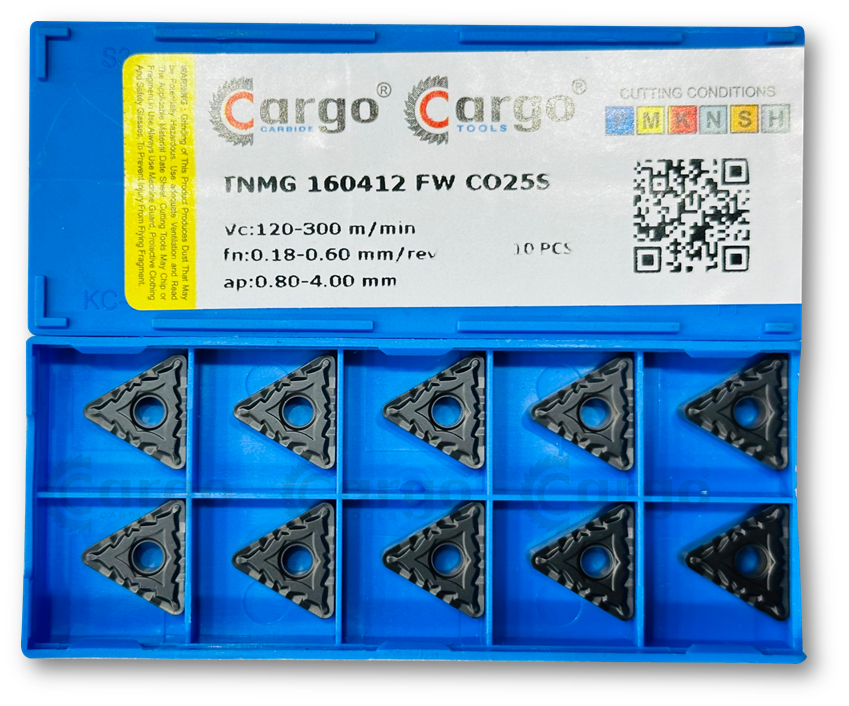
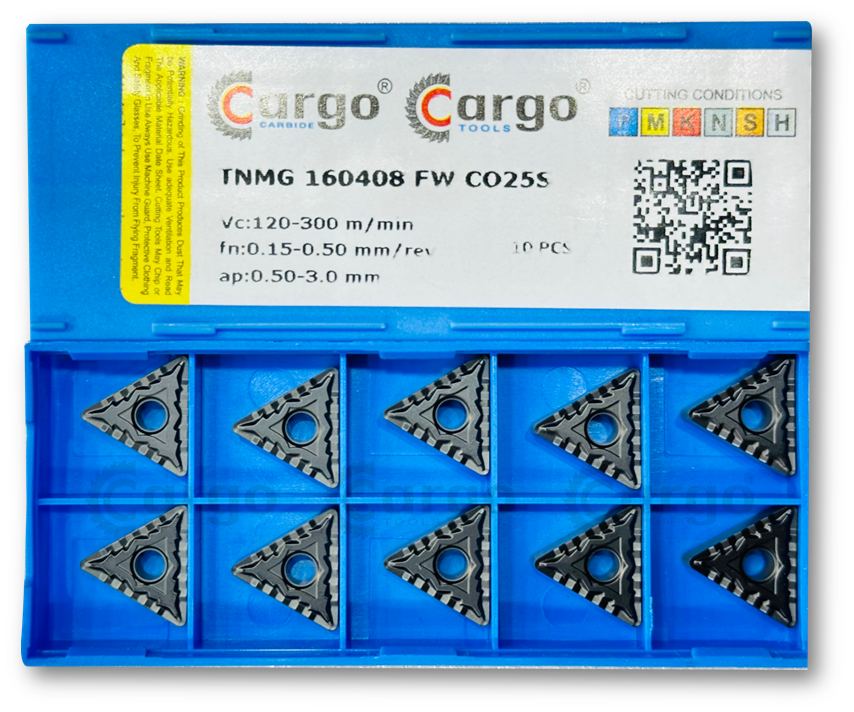
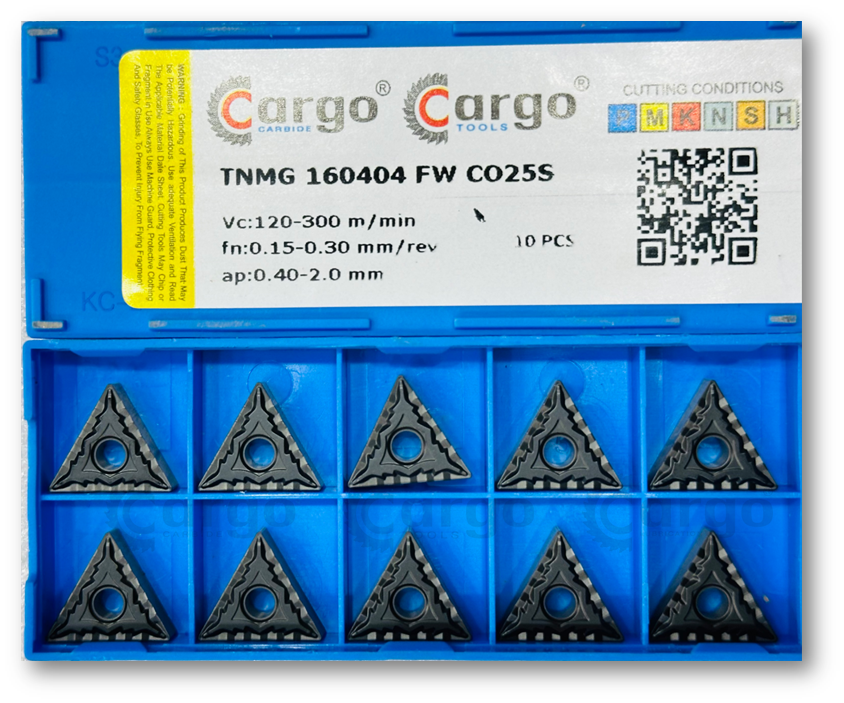

Cargo Carbide TNMG FW-25 Steel Insert is a carbide turning insert designed for CNC machining of suitable steel components. The FW-25 geometry provides a dedicated cutting-tool option for turning applications where consistent edge engagement, controlled machining and dependable production performance are required.
The TNMG FW-25 Steel Insert is intended for compatible steel-turning operations such as external diameter turning, facing and general production machining. The actual performance depends on the selected grade, insert size, nose radius, cutting speed, feed rate and depth of cut.
Choosing the correct geometry for the machining operation can help CNC manufacturers achieve more predictable cutting conditions and consistent component quality. Cargo Carbide provides steel-specific TNMG tooling for workshops and engineering manufacturers that require inserts matched to their workpiece material.
For customers searching for a TNMG FW-25 insert for steel, steel carbide turning insert or CNC steel turning insert, Cargo Carbide offers this FW-25 configuration for compatible industrial machining applications.
| Specification | Details |
|---|---|
| Brand | Cargo Carbide |
| Product | TNMG FW-25 FOR STEEL |
| Insert Type | TNMG |
| Geometry | FW-25 |
| Cutting Material | Carbide |
| Workpiece | Steel |
| Application | CNC Steel Turning |
| Machine | CNC Lathe / Turning Machine |
| Operations | Turning / Facing / Production Machining* |
A TNMG FW-25 Steel Insert is a carbide turning insert with FW-25 geometry designed for compatible steel-machining applications on CNC turning machines.
It can be used for suitable steel-turning operations such as external turning, facing and production machining, depending on the selected grade and cutting conditions.
Yes. It is suitable when the insert dimensions and geometry match the TNMG tool holder and the selected grade is appropriate for the steel workpiece.
Consider the steel grade, cutting operation, depth of cut, feed rate, cutting speed, insert size and nose radius. These factors help determine the appropriate insert configuration.
A grade and geometry selected for steel can provide cutting characteristics better suited to steel machining than an insert intended for a different workpiece material. Correct selection should always be based on the actual machining conditions.